Medicare Inpatient Charges Analysis
Project Overview
This project focuses on analyzing the Medicare Inpatient Charges dataset, which is part of the Google Cloud Public Datasets under the healthcare section. The dataset contains detailed information about hospital charges, Medicare payments, and provider details for inpatient services across the United States.
The goal is to explore and analyze healthcare data to uncover insights that can improve hospital performance, optimize Medicare payments, and inform policy decisions. By leveraging Google BigQuery, I handle this large dataset efficiently to perform advanced analytics on healthcare costs and provider performance.
Why I Chose This Project
I selected this project for several key reasons:
- Interest in Healthcare Analytics: I'm passionate about using data to improve patient outcomes and healthcare efficiency.
- Big Data Challenge: The dataset's size made it perfect for practicing with Google BigQuery's scalable processing capabilities.
- Real-World Impact: The analysis can directly help hospitals optimize operations and policymakers make informed decisions.
- Skill Development: This project allowed me to enhance my SQL, data visualization, and healthcare analytics skills.
Tableau Visualization
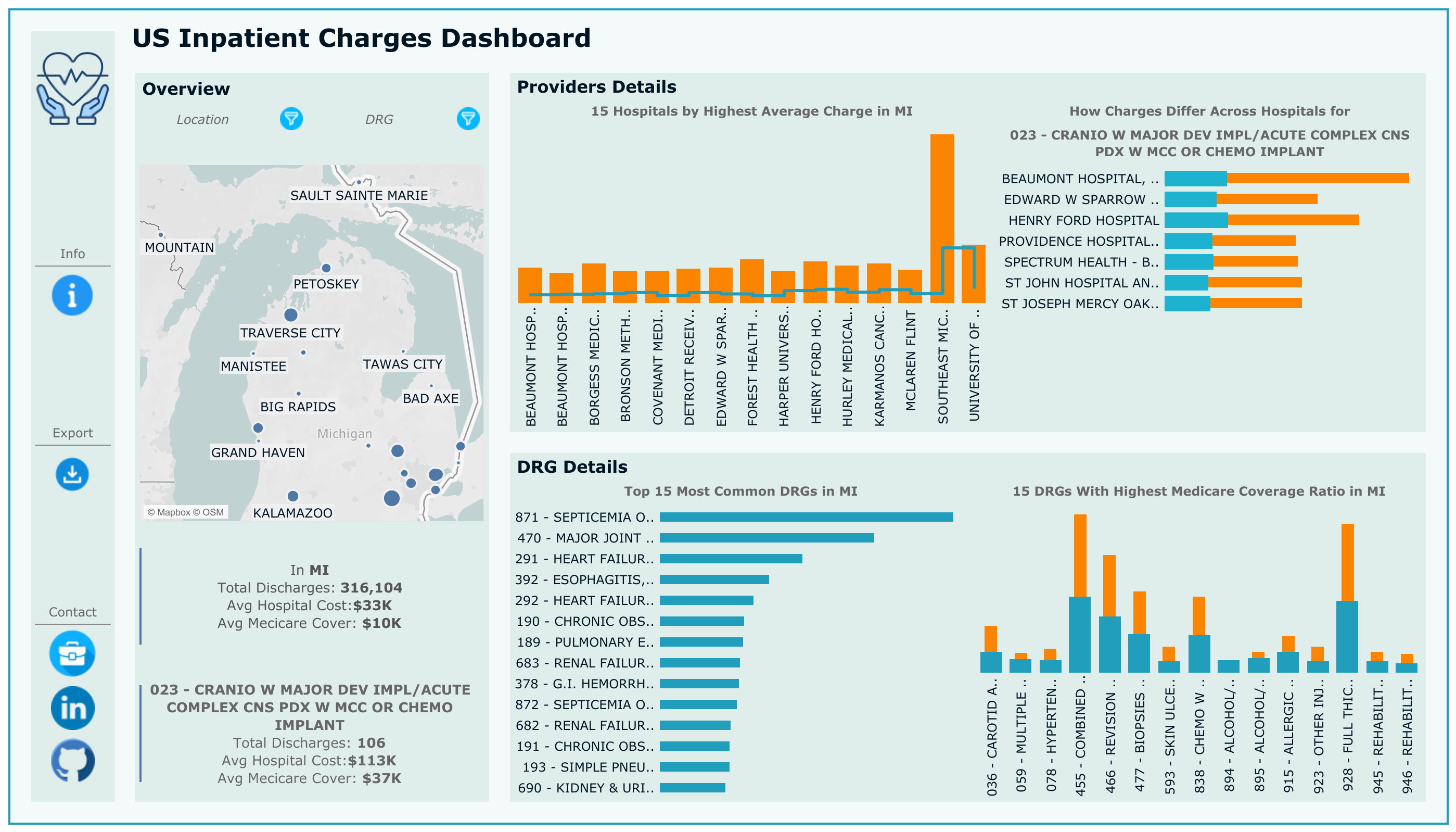
To make these insights accessible, I created an interactive Tableau dashboard:
Key Questions Explored
- What are the average covered charges vs. Medicare payments for different conditions?
- Which hospitals have the highest/lowest charges and payments?
- How do charges vary by state or region?
- Are there disparities between urban and rural hospitals?
- What's the relationship between discharges and payments?
- Which conditions have the highest Medicare payments?
Data Analysis Process
Data Exploration in Google BigQuery
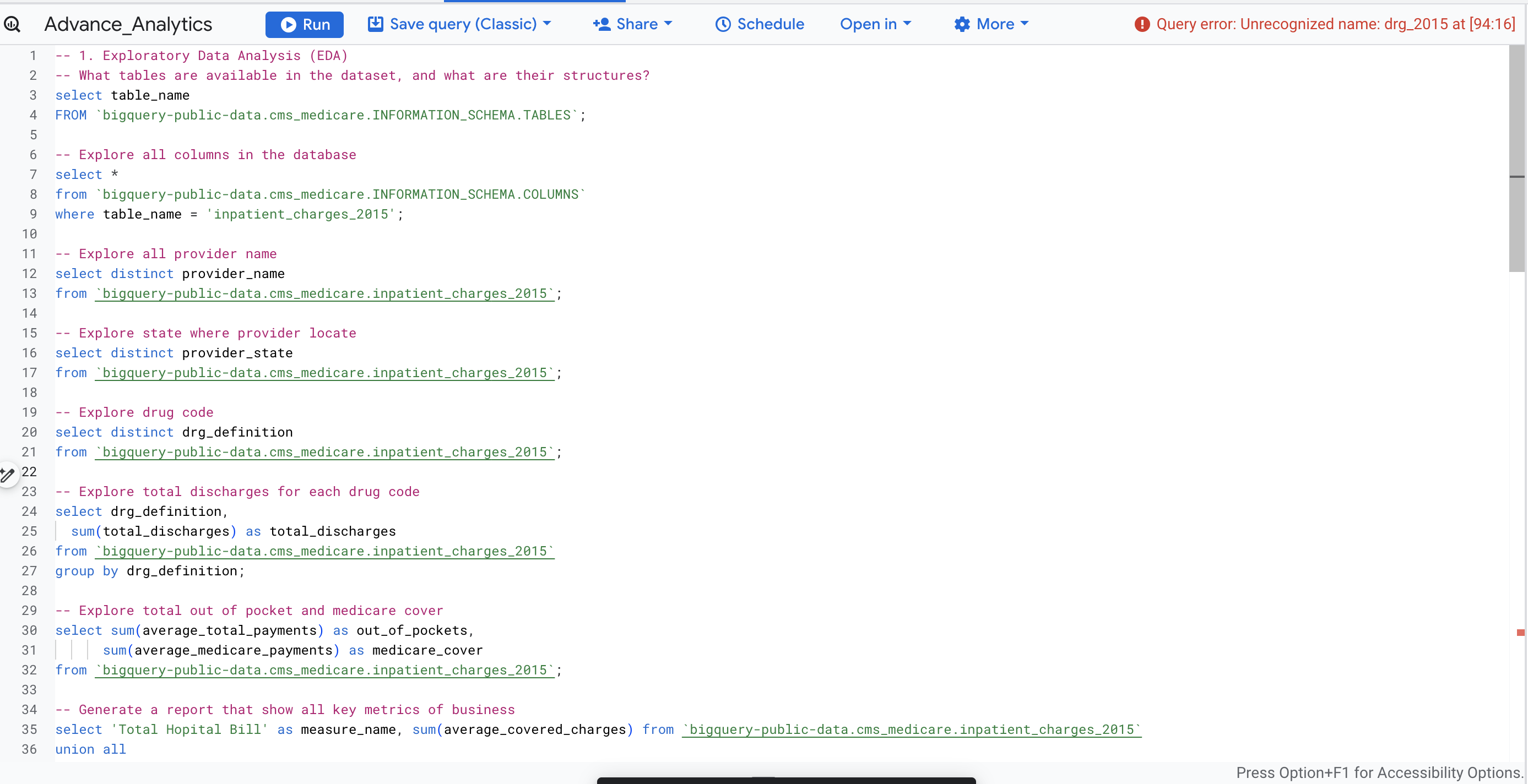
Exploratory Data Analysis (EDA)
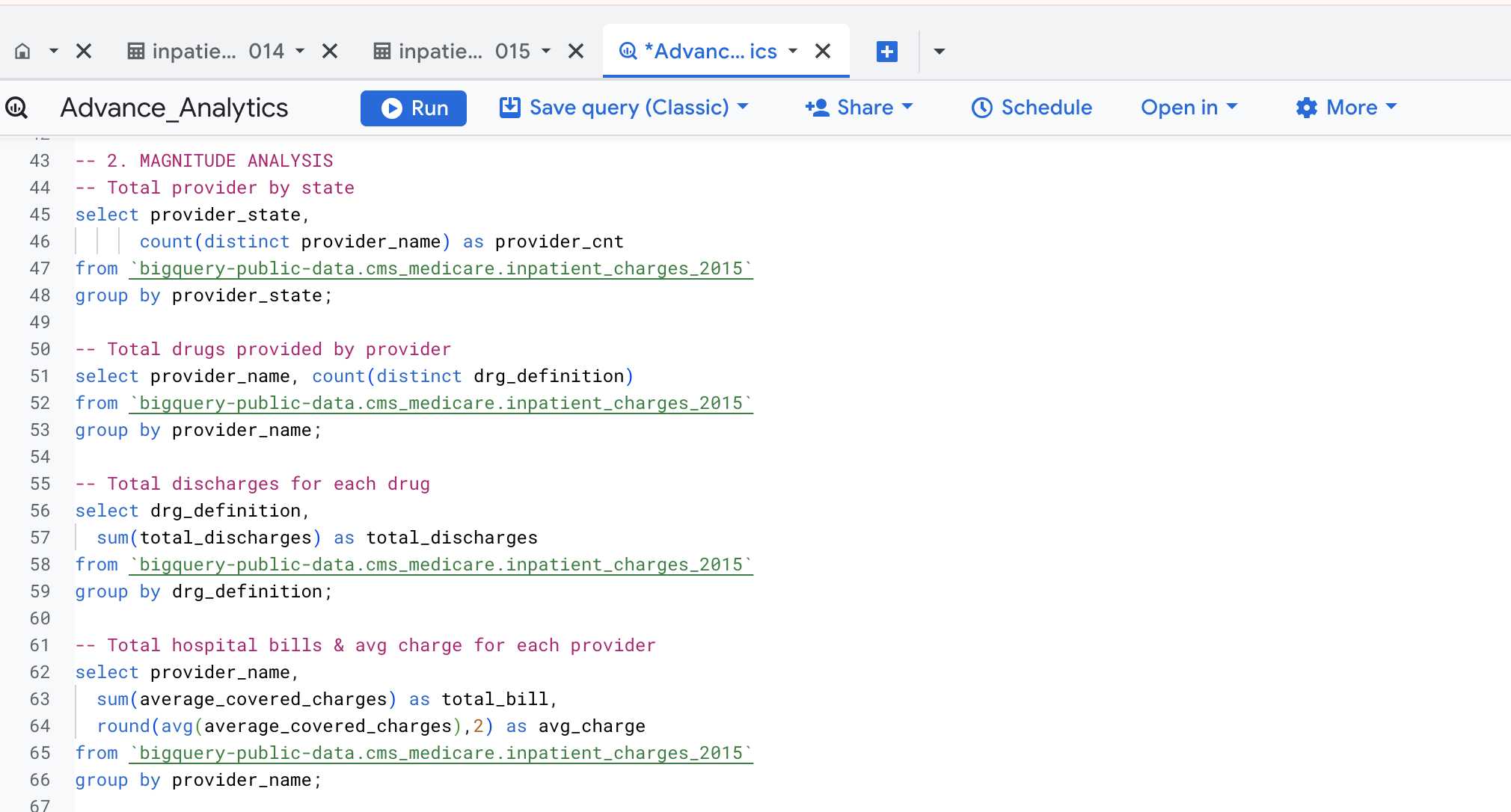
Magnitude Analysis
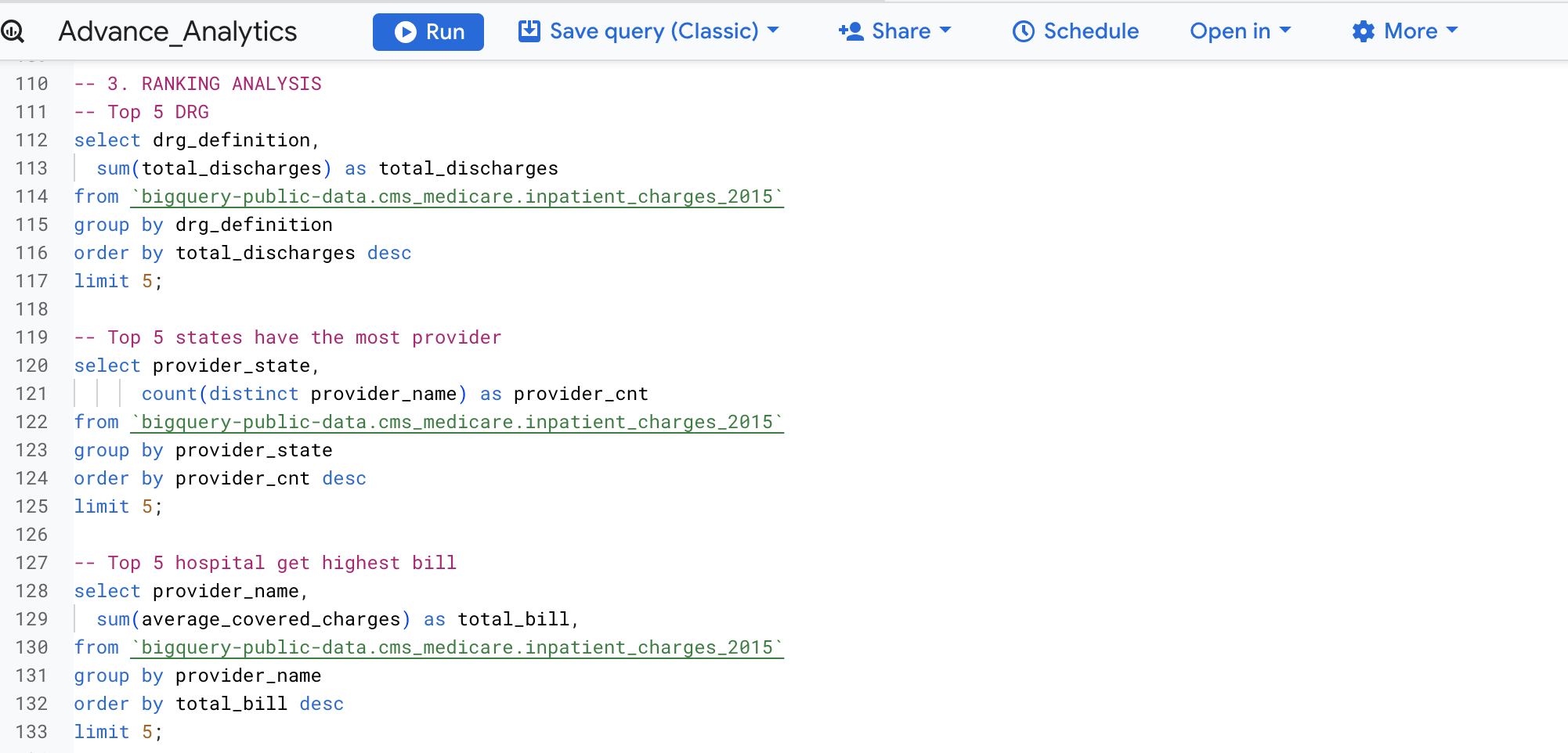
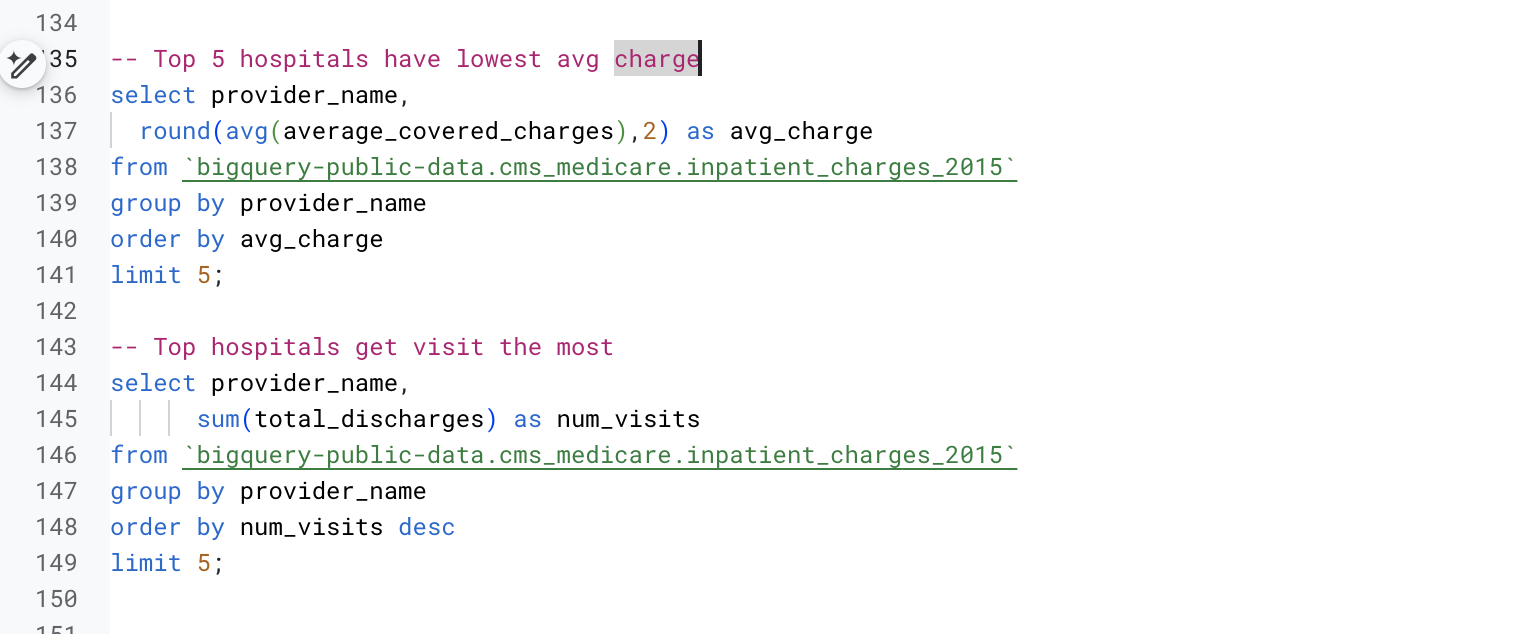
Ranking Analysis
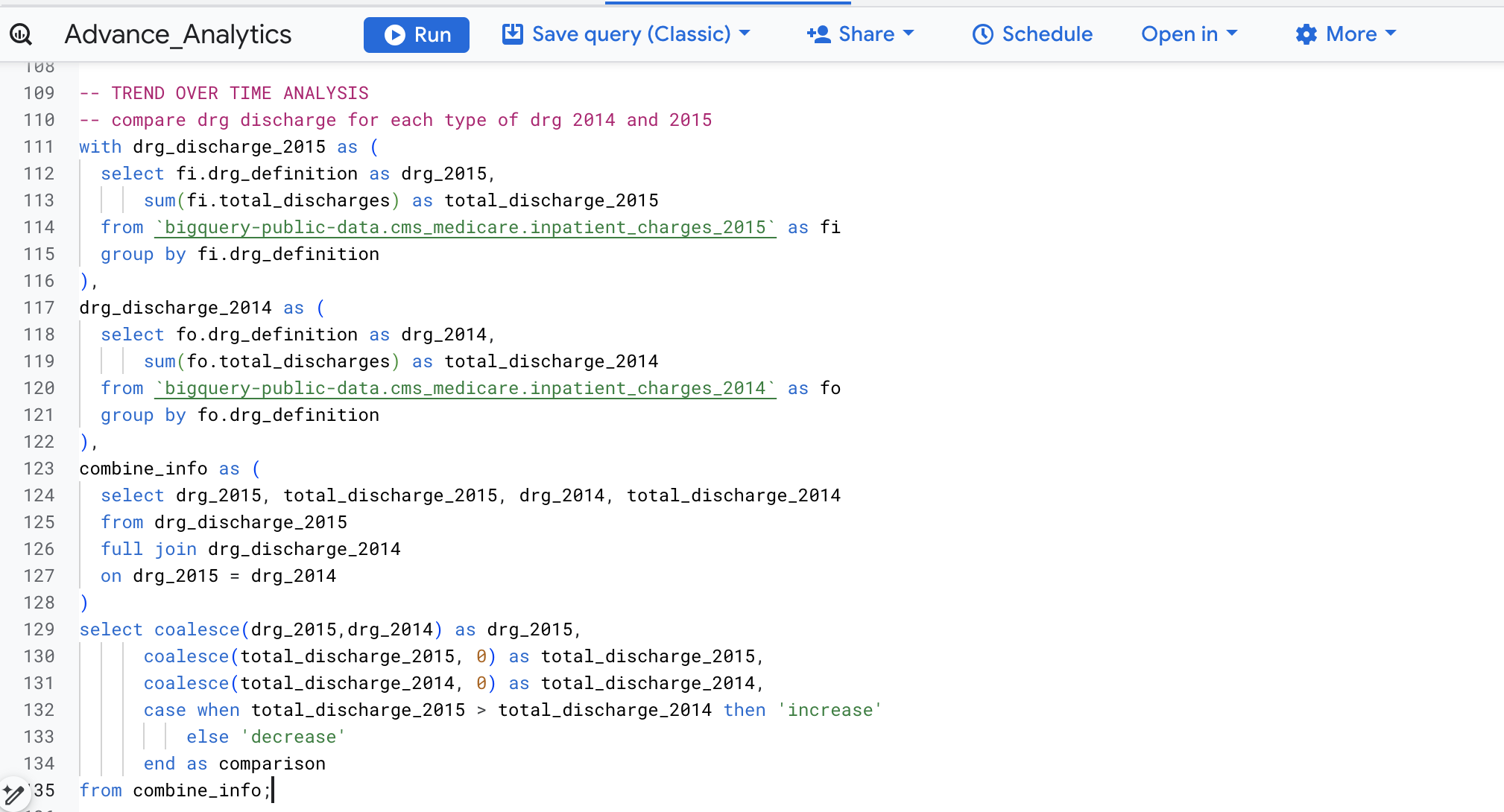
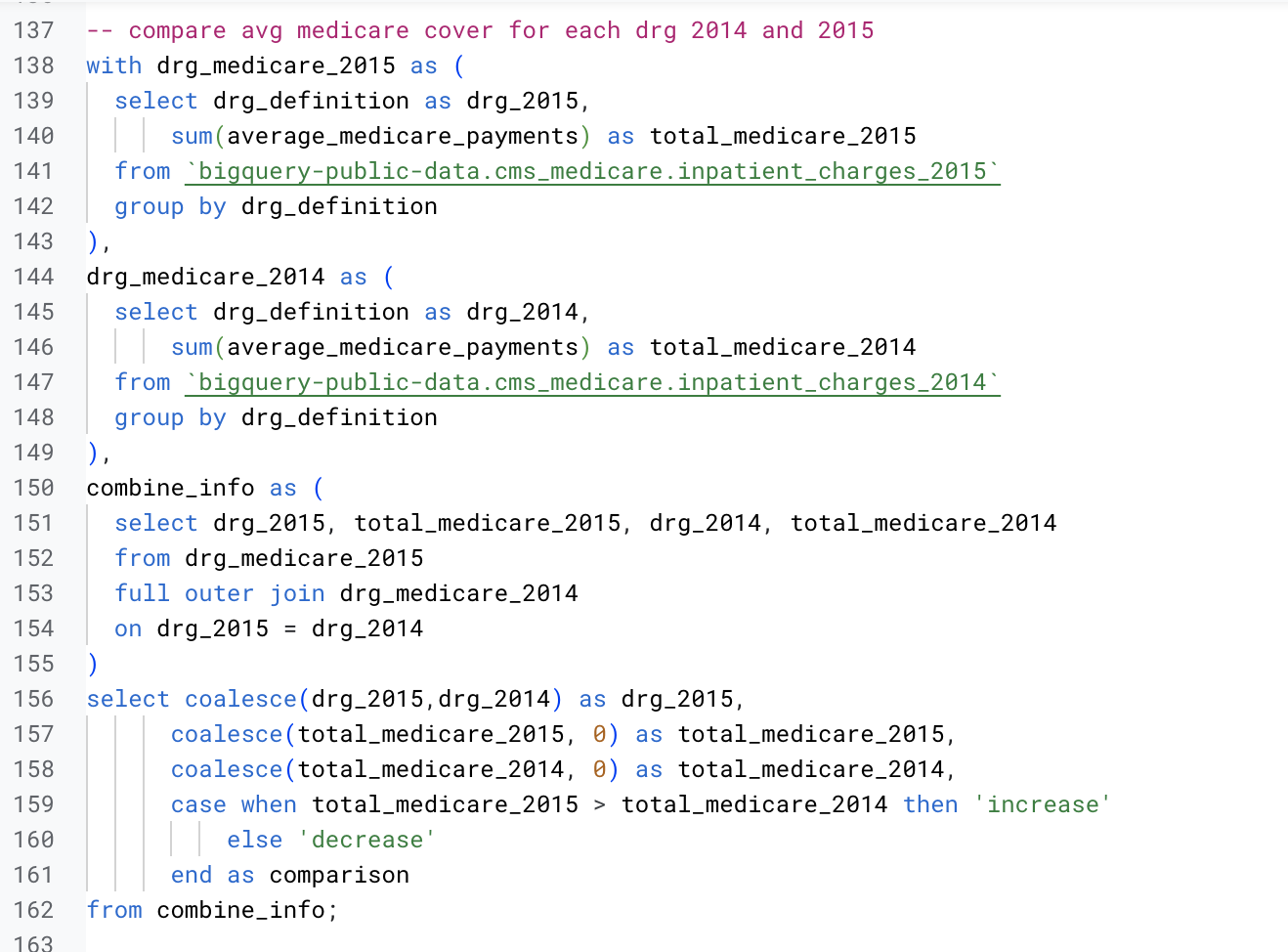
Trend Analysis
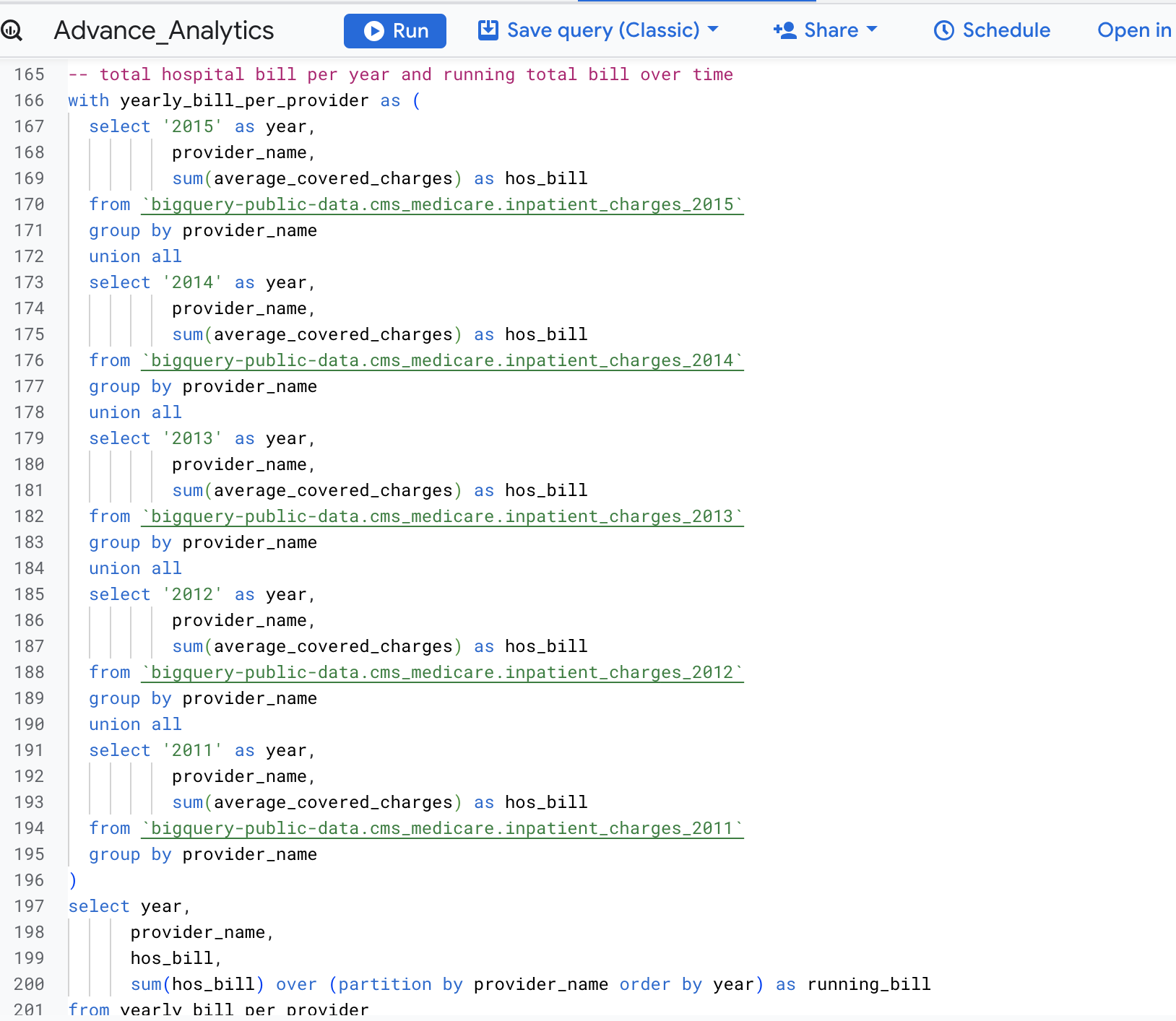
Cumulative Analysis
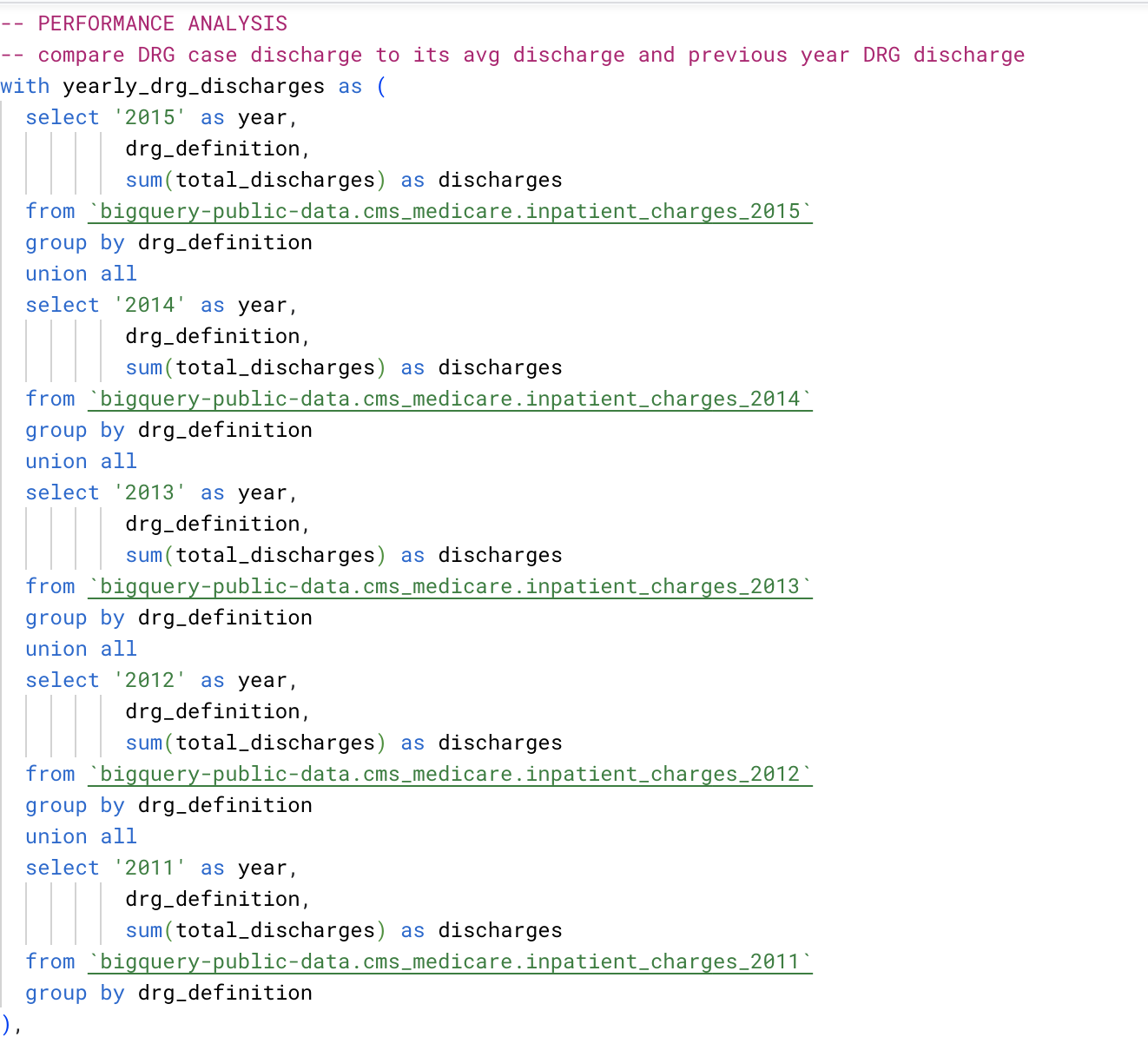
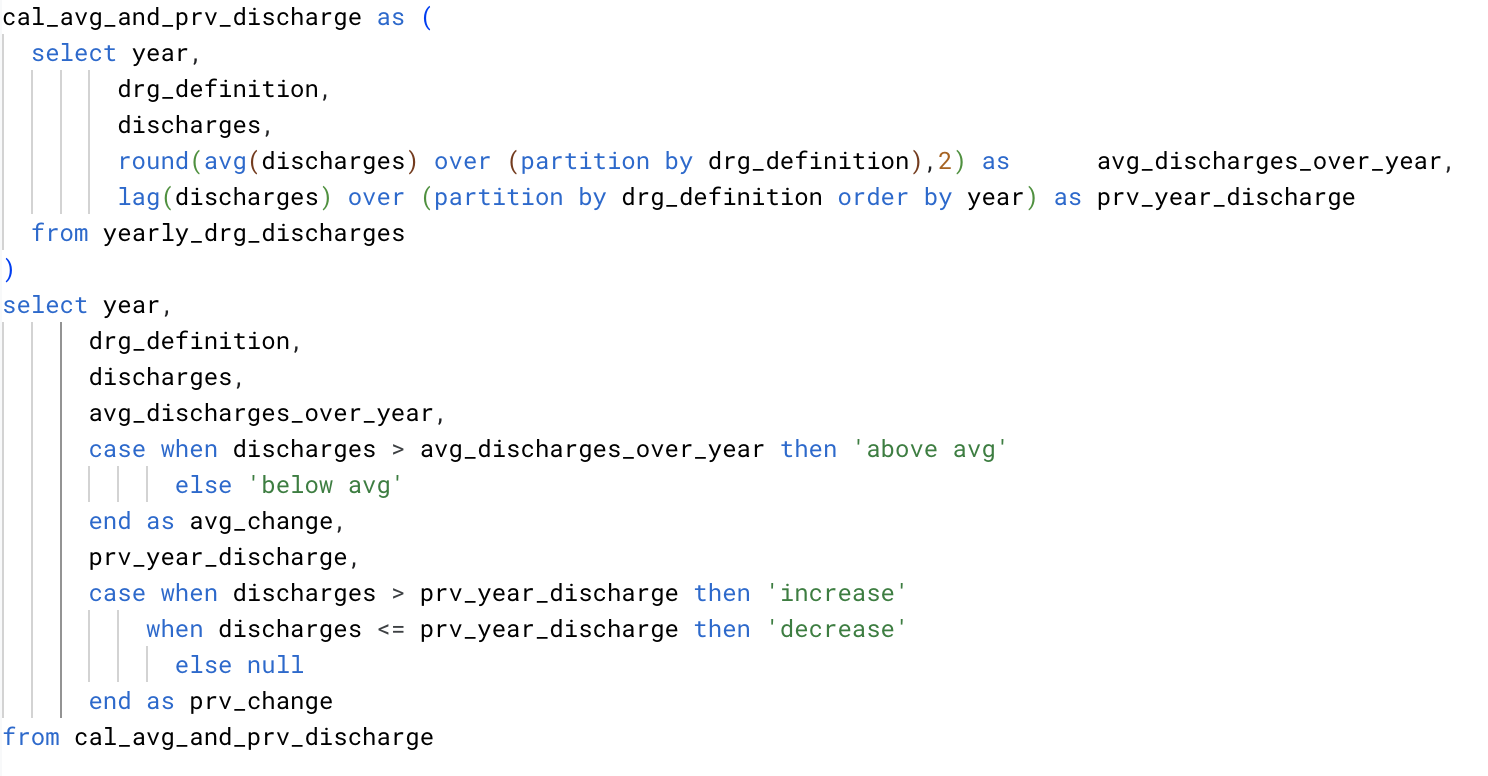
Performance Analysis
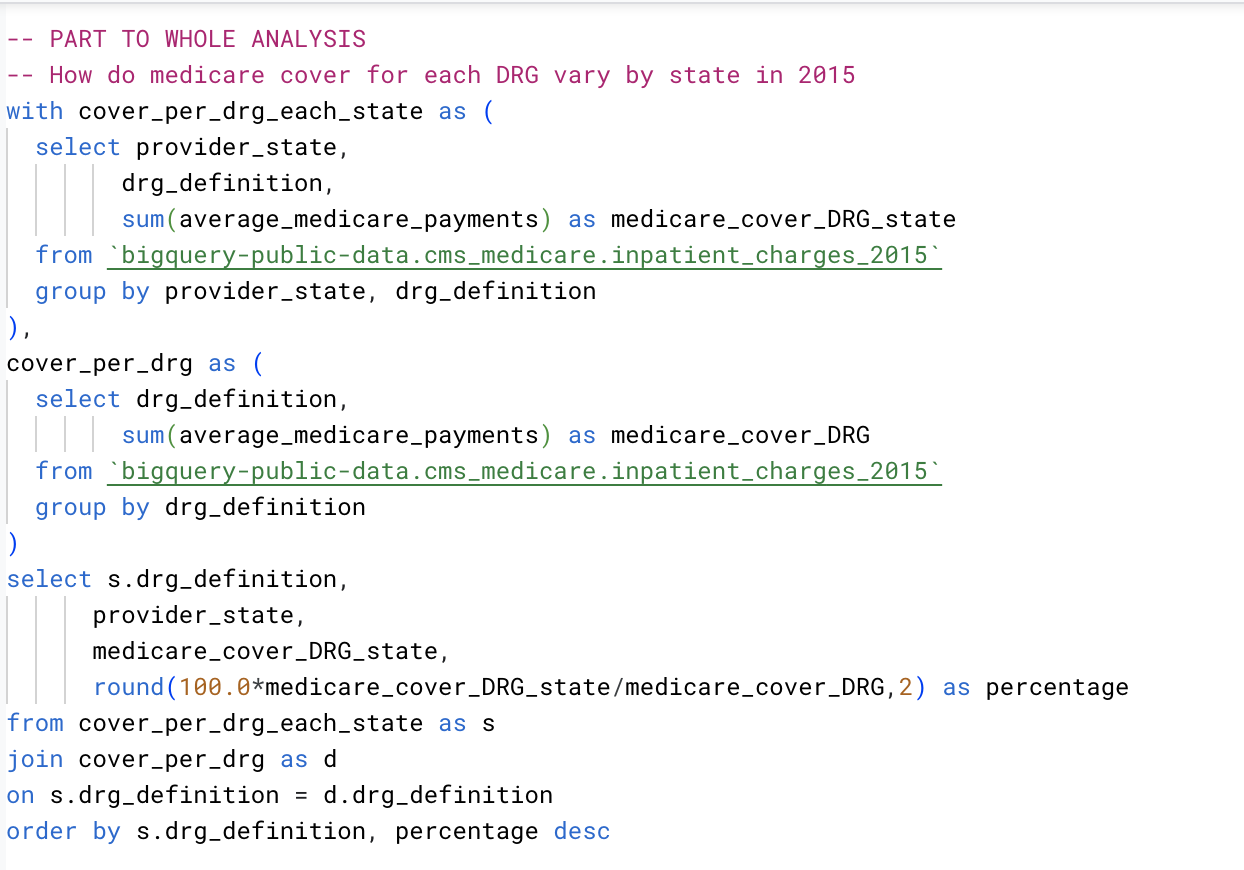
Part To Whole Analysis
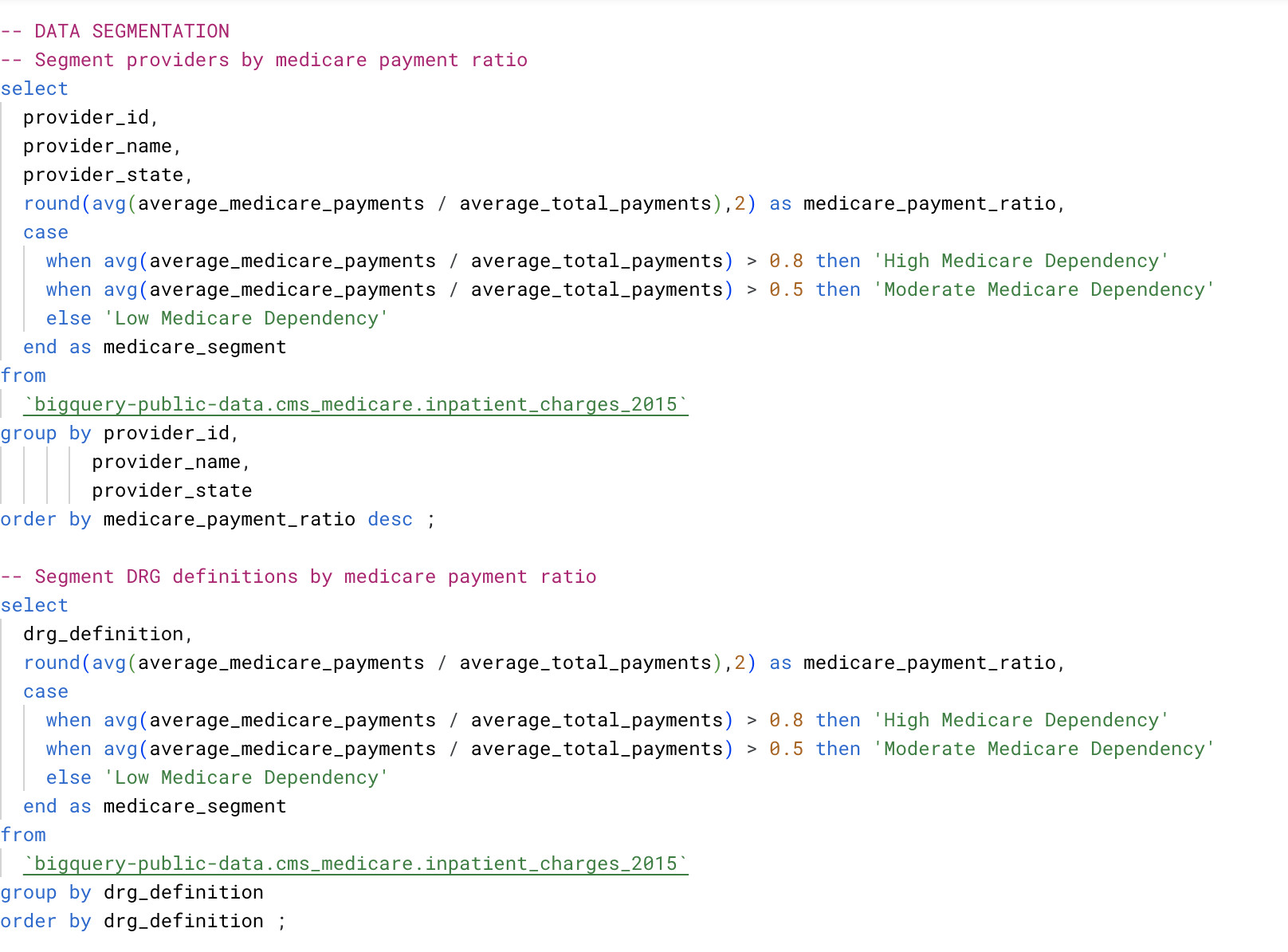
Data Segmentation Analysis
Reports
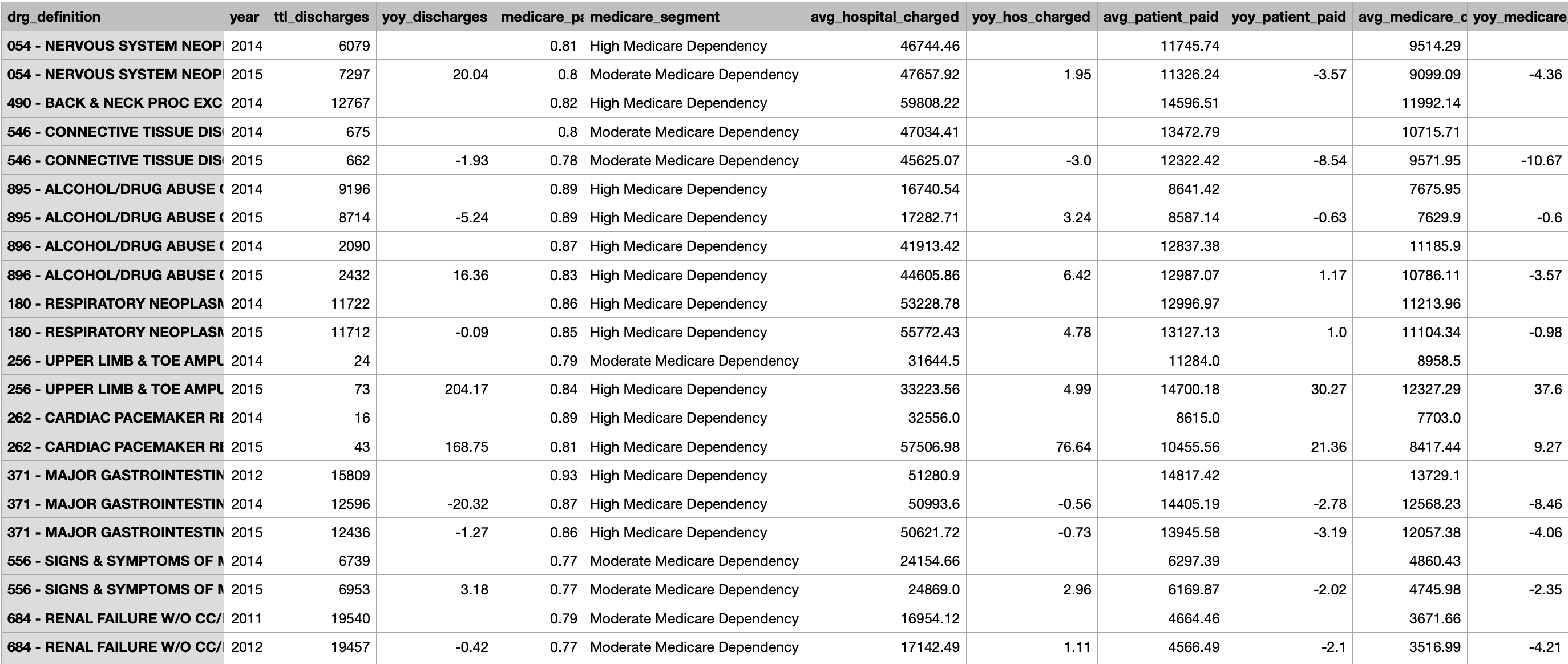
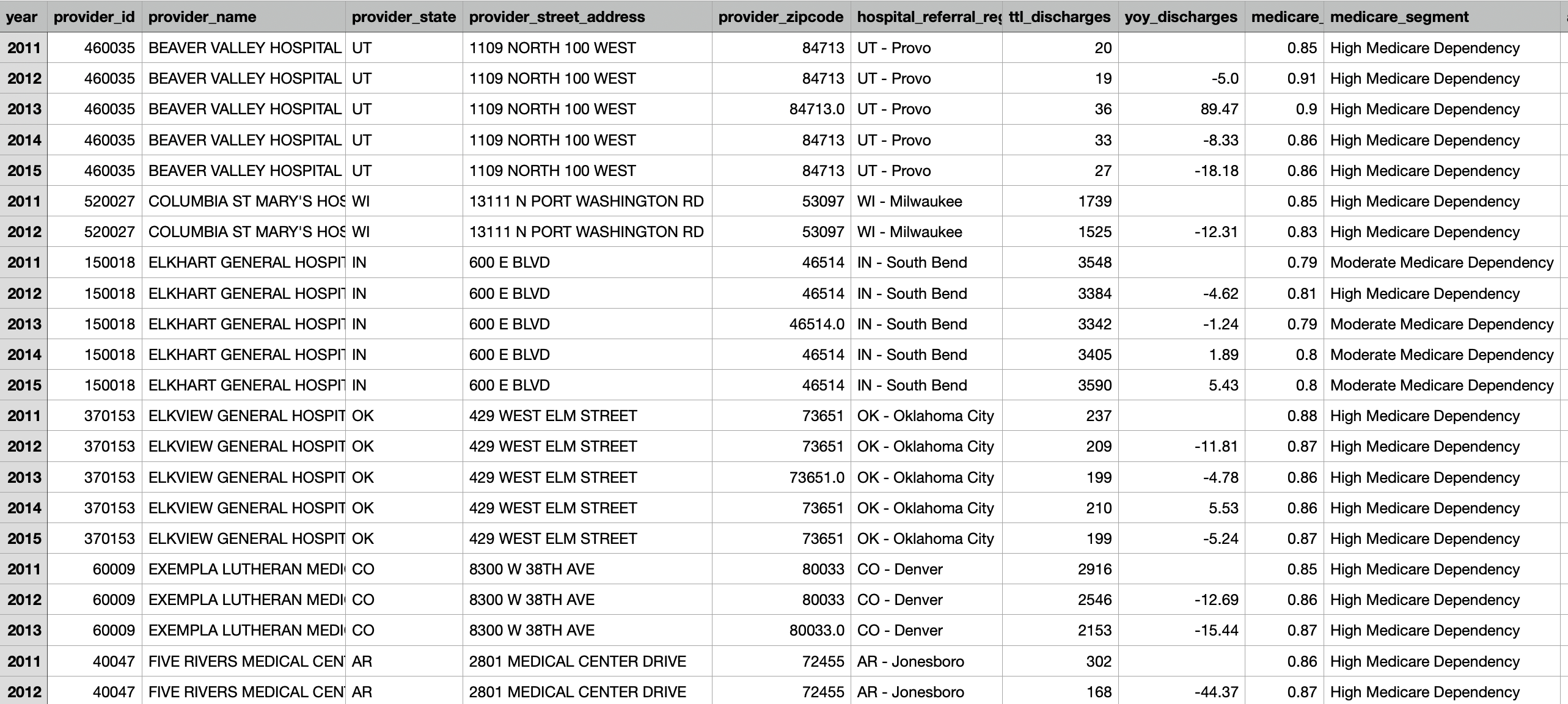
After cleaning the data and performing advanced analytics, I created three key reports to provide actionable insights for stakeholders:
-
DRG Report:
- Segments DRG into High Medicare Dependency, Moderate Medicare Dependency, or Low Medicare Dependency categories.
- Aggregates metrics: total medicare cover, total hospital bill, and total discharges.
- Calculates KPIs: year over year change
-
Providers Report:
- Analyzes provider types, name, and location.
- Aggregates metrics: total medicare cover, total hospital bill, and total discharges .
- Calculates KPIs: yoy change.
- Significant variation in charges for the same procedures across different hospitals
- Regional disparities in Medicare payment rates
- Certain DRG codes showing particularly high profit margins for hospitals
- Interesting patterns in urban vs. rural hospital performance
Key Findings
Through analysis, I discovered several important insights:
Conclusion
This project demonstrated how data analytics can uncover significant opportunities for improving healthcare efficiency and cost management. By analyzing Medicare inpatient charges at scale using Google BigQuery and visualizing the findings in Tableau, I identified actionable insights that could help hospitals optimize their financial performance while ensuring fair access to care. The analysis also revealed important regional disparities that policymakers could address to improve healthcare equity nationwide.
The skills developed in this project - working with large healthcare datasets, advanced SQL analysis in BigQuery, and creating impactful visualizations - are directly applicable to many healthcare analytics roles.